The wind dies down around 2 a.m. You go to the window. The big oak in the side yard in Howell is still standing, but it doesn’t look right. It’s leaning toward the house a little more than it did yesterday, and there’s a crack in the dirt along one side of the trunk.
Is that an emergency? Or can it wait until Monday?
Call a professional tree service right away if a tree or large limb is on your house, your car, or your driveway. Same if a tree is leaning toward something with the soil lifting at its base, the trunk is split through, or a broken branch is hanging up in the canopy.
And if a tree is touching a power line, don’t call us first. Call 911 and stay back. A few small branches down in the yard? That can wait for a regular appointment.
Emergency or not?
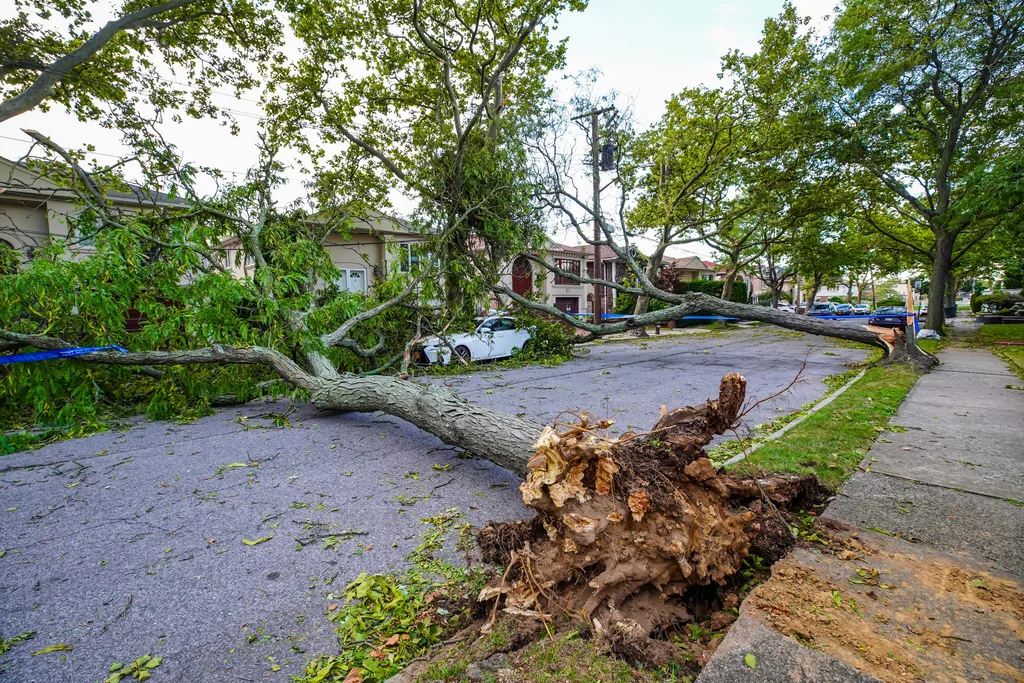
Emergency Tree Removal Monmouth County
| What you see | What to do |
| Tree or big limb on the house, car or driveway | Call a tree service now |
| Tree touching a power line | Call 911, stay 30 feet back |
| Tree leaning, soil heaving or roots showing | Call now, keep people away |
| Trunk split or cracked through | Call now |
| Broken limb hanging in the tree | Call now, don’t walk under it |
| A few small branches on the lawn | Clean up later, or book a visit |
| Tree looks fine, you’re just worried | Book a free assessment |
Power lines come first
Get this one out of the way. If a tree or limb is on a wire, or a wire is on the ground, you can’t tell by looking whether it’s live. FirstEnergy, the company behind JCP&L, which serves much of Monmouth County, says to always assume a downed wire is carrying electricity and to stay at least 30 feet away. Their advice is to call 911 when you see a line down.
That means no chainsaws. No pulling a branch off with a rope. No letting the kids go look. Once the utility makes the line safe, the tree itself is our job.
Signs a tree needs to come down now
Storm damage isn’t always obvious. A tree can look mostly fine and still be close to falling. UMass Extension, which publishes guidance on inspecting storm-damaged trees, points to a few red flags.
A lean that wasn’t there before. Especially when the ground behind it is mounded up or cracked and you can see roots coming out of the soil. That’s the root plate starting to lift. A tree that’s leaned gently for 20 years is a different story. The new lean is the scary one.
Cracks that go all the way through the trunk. UMass calls a crack that runs clear through, or cracks on two sides of the trunk, a very dangerous situation. Same with a crack sitting next to a cavity or decay.
Hangers. These are broken limbs still caught up in the crown. They can drop hours or days after the storm, with no warning at all. FirstEnergy makes the same point: weakened limbs can come down later, so don’t stand under them.
A crown that’s mostly gone. If the storm stripped out a big chunk of the top, the tree may not be worth saving.
When it can wait
Not every storm means a tree has to go. If a tree lost several branches or a broken leader but the trunk and roots are solid, it can often be saved by cutting out the damage and pruning what’s left. That’s normal work, not an emergency. Our post tree Trimming vs Tree Pruning: What’s the Difference and When Does Each Help? explains which one fits.
Small branches scattered over the lawn? Rake them up or let us get them during a regular cleanup.
Don’t do this part yourself
We get it. The limb is right there and you own a chainsaw. But storm-damaged wood is loaded with tension. A trunk pinned under another trunk can snap back the second you cut it. A tree resting on your roof can shift and fall further. And climbing a damaged tree with a saw is how people get hurt.
There’s also a legal side in New Jersey. The NJ Board of Tree Experts says it’s now mandatory to hire a tree care business registered with the state. Ask to see the business registration, proof of insurance, and the name and license number of the licensed person on the job. The Board also warns that a general business license or a pesticide license isn’t the same thing.
What happens when you call us
We answer emergency calls 24/7, and we cover Monmouth and Ocean County from our base in Howell. When we get there, the first thing is making the area safe. Then we take the tree or limb off whatever it’s sitting on, piece by piece, so nothing else gets damaged. After that comes cleanup and stump grinding if you want it.
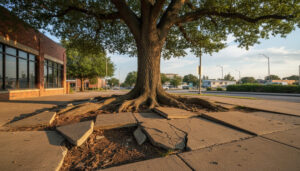
If you’ve never had a tree taken down before, read What to Expect During Tree Removal Process for a step-by-step look. And if the tree that worries you is close to the house, Can Tree Roots Damage Foundations, Driveways and Sewer Lines? What NJ Homeowners Should Know is worth a read too.
Worried about a tree before anything happens? A free assessment before storm season can catch a cracked trunk or a dead limb while it’s still a scheduled job.
Frequently asked questions
When is tree removal an emergency?
When a tree or big limb is on a building, car, or driveway, when a tree is leaning with the soil lifting, when the trunk is split through, or when a broken limb is hanging in the crown.
What should I do if a tree falls on a power line?
Stay at least 30 feet away and call 911. Treat the line as live. A tree service can deal with the tree once the line is safe.
Can a storm-damaged tree be saved?
Sometimes. If it only lost a few branches or a broken leader and the trunk and roots are sound, pruning out the damage can work.
Do tree services in NJ need to be registered?
Yes. The NJ Board of Tree Experts says you must hire a tree care business registered with the state. Ask for the registration, insurance and the licensed person’s license number.
Tree down or leaning after a storm? Fly With Freedom Tree Service has worked out of Howell for more than 30 years. Call 732-300-4503 any time, day or night. You can also see our Tree Removal & Management services, look through the Gallery, read our Testimonials, or contact us.