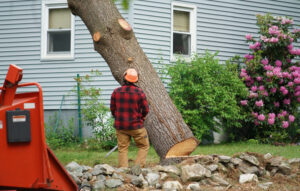
Someone in a Facebook group once posted a video of themselves cutting down a backyard oak. Confidence? Ten out of ten. Safety related stuff? Zero out of ten. The tree came down sideways. It missed the fence but took out a garden shed, two lawn chairs, and apparently whatever dignity was left in the neighborhood.
Tree removal safety is not a suggestion. It is the entire job. It’s not like everybody can just say I am going to do this!
Every year, thousands of Americans attempt to remove trees on their own and a shocking number of those stories end in emergency rooms. The work looks simple from a distance. It is not simple up close.
Here is what professionals like us do to make the job worth everyone’s while.
We Actually Walk the Property First
Call Us To Remove Your Tree Safely
Before a single chainsaw fires up, our crew does a full site assessment. This sounds obvious, but you would be amazed at how many outfits skip it entirely.
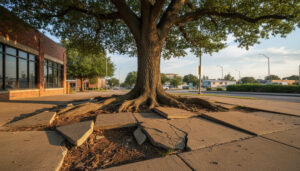
We look for power lines running through the canopy. We check the lean of the trunk. We identify decay, weak branch unions, root damage, and anything else that could turn a clean cut into a chaotic mess.
We also look at the surroundings. Is there a fence that needs protecting? A parked car? A swimming pool that would really not appreciate a falling limb? These details matter enormously.
Gear That Does Its Job
Let us talk about personal protective equipment because this is where corners get cut most aggressively.
Our arborists wear chainsaw-resistant chaps. They wear steel-toed boots with ankle support. Helmets with face shields and integrated hearing protection are non-negotiable on every job. Gloves. High-visibility vests. The whole wardrobe.
Chainsaw chaps alone dramatically reduce the risk of leg injury, yet plenty of guys still climb trees in jeans. Jeans are great for concerts. They are not chainsaw-rated.
We also inspect equipment before every single job. A dull chain is a dangerous chain. A frayed rope is an unacceptable rope. Equipment is checked, and if anything is questionable, it is replaced before we ever pull into your driveway.
Controlled Tree Felling Starts With a Real Plan
Every tree comes down based on a plan. Not a rough idea. Not a hunch. A real, calculated plan.
We identify the target zone where the tree is meant to fall. Then we establish an escape route. Two escape routes, actually, because trees do not always cooperate with the first plan.
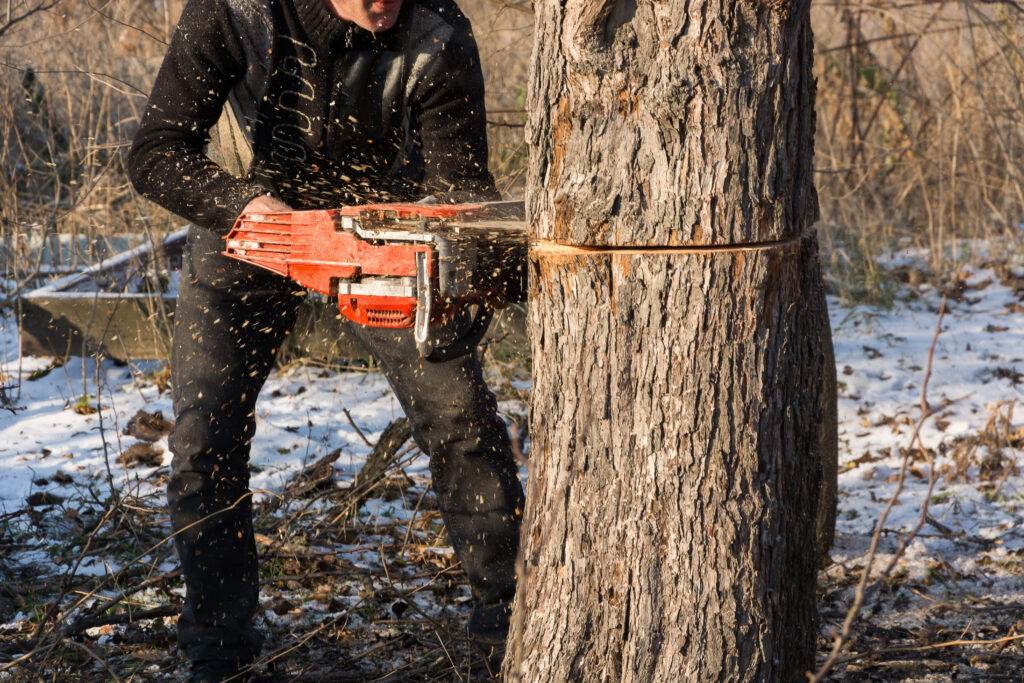
The notch cut technique is what controls the direction of the fall. A face notch is made on the side facing the intended landing zone. Then the back cut is made on the opposite side, leaving a wooden hinge that guides the fall. It sounds simple when described in a sentence, but executing it correctly under field conditions is where the skill lives.
We have seen stumps with back cuts that were so poorly made that the hinge basically did not exist. That is how trees fall in the wrong direction. That is how sheds get destroyed. That is how people get seriously hurt.
Nobody Works Alone
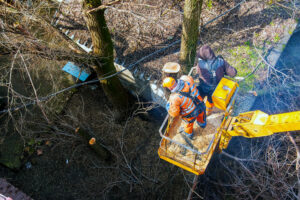
This is a rule that does not bend. Tree work requires a ground crew. It requires someone to watch the canopy while someone else cuts. It requires a spotter. It requires someone to manage the drop zone and keep uninvited bystanders from wandering into the work area.
We establish a clear hazard zone around every tree before work begins. The general guideline is two times the height of the tree in every direction. People are kindly asked to keep children and pets well back. Curious neighbors get a wave from a safe distance.
Communication is constant in our jobs. Hand signals. Verbal calls. Everyone knows what is happening at all times.
A friend who works in emergency services once told us that the most common tree injury he sees is not from the tree itself. It is from the ground crew not knowing where to stand. That stays with you.
What Happens After the Tree Is Down!
Here is the part most blogs skip entirely.
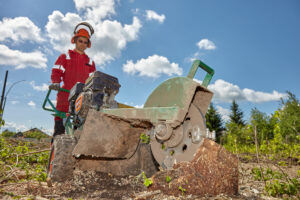
Stump grinding creates projectile debris. Wood chipper operations require strict clearance zones. Hauling large sections of trunk involves rigging that carries its own set of risks if done poorly.
We treat the cleanup phase with the same level of attention as the cut itself. The job is not done when the tree hits the ground. The job is done when the site is clean and everyone is still in one piece.
Conclusion
Tree removal done safely is methodical, deliberate, and yes, a little boring by design. Boring is the goal. Boring means nothing went wrong. Chaos is expensive. Chaos sends people to hospitals. Chaos ruins sheds.
We follow these steps on every job, not because we are required to but because they work. Every time.
Work With a Team That Takes This Seriously
At Fly With Freedom Tree Service, LLC, we believe safe tree removal is not a premium service. It is the baseline. Every assessment, every gear check, every escape route calculation is built into what we do from the moment we pull up to your property. If you have a tree that needs to come down safely and professionally, reach out to Fly With Freedom Tree Service, LLC today. We are here to make sure the only thing that falls is the tree. Just a call is all it takes.